Skip to content
Home » herd immunity » Page 2

herd immunity

herd immunity

Yes, vaccine herd immunity works – scientific evidence supports this fact

This piece is a summary of Herd Immunity and Immunization Policy: The Importance of Accuracy, published in v. 94 of the Oregon Law Review.

As a bit of background, in an article that was published in the Oregon Law Review in 2014, authors Mary Holland and Chase E Zachary claimed that school immunization mandates are inappropriate because they reject the concept that herd immunity works.

This article will explain why Holland and Zachary’s analysis or immunization mandates and herd effect is simply incorrect. And let’s be clear – there is a legitimate debate about whether school immunization mandates are appropriate, policy-wise, as a response to non-vaccination.

Unlike vaccine science, the appropriate policy to handle non-immunization is not agreed upon, and the data on what is the right way to get people to vaccinate is anything but clear (though some things are clear – for example, harder to get exemptions lead to higher vaccination rates). But the debate needs to be premised on accurate facts – not on misuse of legal terms and incorrect scientific data. Holland and Zachary’s article does not provide that.Read More »Yes, vaccine herd immunity works – scientific evidence supports this fact

2019 measles epidemic

2019 measles epidemic still going strong – the MMR vaccine stops it

As of 10 May 2019, the CDC has reported 839 cases in the 2019 measles epidemic – the vast majority of these individuals were unvaccinated. As a result, this year is the worst for measles in the USA since 1994, just prior to the startup of the Vaccines for Children Program (VCP) that provides free vaccines to US children.

VCP was passed into law as a consequence of another measles epidemic, from  1989-91, that resulted in over 55,000 reported cases of measles, 11,000 measles-related hospitalization, and 123 deaths. It’s amazing what vaccines can do.Read More »2019 measles epidemic still going strong – the MMR vaccine stops it

measles vaccine coverage

Measles vaccine coverage stagnant – increased measles cases in 2017

According to new research published by the CDC and World Health Organization (WHO), worldwide measles cases have spiked in 2017. Multiple countries have reported severe and protracted measles outbreaks over the past year. Because of large gaps in measles vaccine coverage across the world, there were an estimated 110,000 worldwide measles-related deaths in 2017.

Let me repeat that – 110,000 measles-related deaths in 2017. This is a disease that the anti-vaccine religion will claim over and over that it’s not a very dangerous disease. Even in the USA, where it is estimated that 1-2 children will die out of 1,000 infected by measles, it is still a dangerous disease. Of course, anti-vaxxers dismiss that risk of death as “low,” showing little empathy for children that die of measles every year.

There are other serious complications of measles:

Measles is not trivial. And the only way to prevent the highly contagious disease is with two doses of the measles vaccine. Read More »Measles vaccine coverage stagnant – increased measles cases in 2017

Attacking SB277 with another lawsuit –Torrey-Love v. State of California

On 21 November 2016, a new lawsuit attacking SB277, the state’s statute removing the personal belief exemption from immunization requirements, was filed with a federal district court in Riverside (Central District of California, Eastern Division), assigned to Judge Dolly M. Dee. The complaint, like previous lawsuits, faces serious hurdles.

Read More »Attacking SB277 with another lawsuit –Torrey-Love v. State of California

SB277 vaccine law

California SB277 vaccine law preliminary injunction hearing

Today I attended the hearing for a preliminary injunction in the Whitlow suit, one of the lawsuits against California’s SB277 vaccine law. I arrived early to try and get an impression of the judge, and because I was worried that there would be no room in the court (in the end, everyone who wanted got in). I sat in the court from 11am, and after the courtroom was cleared for lunch break stood in line until it was opened, around 1:15.

Below are my impressions. Since Judge Sabraw ordered that all electronic devices be off during the hearing, and I did not bring a legal pad, I could not take notes, so this is based on my recollections – and I apologize to the lawyers on either side if I misremembered their points. I’ll be happy to be corrected on any details.

In this hearing, the question was whether plaintiffs should get a preliminary injunction, an order putting the SB277 vaccine law on hold until the case is decided.

The standard for a preliminary injunction is a four part standard that looks at:

  1. chances of winning on the merits;
  2. whether there will be irreparable harm to the plaintiffs without the injunction;
  3. how the balance of equities falls – whether the harm to the plaintiffs is larger than the harm to the defendants from granting the injunction;  and
  4. whether an injunction is in the public interest. In the hearing, most of the focus was on the legal merits, though there was some discussion about the potential harm to the plaintiffs.

I admit that my impression was that on almost every issue the state had a better argument, with stronger case law supporting it. However, I am – obviously – a supporter of the SB277 vaccine law, and that may bias my views. It was a long hearing, and I’m no doubt not covering every detail. Read More »California SB277 vaccine law preliminary injunction hearing

HPV vaccine lowers cancer risk

HPV vaccine lowers cancer risk and healthcare costs

If you overlook the plain ignorance of junk medicine pushers on the internet, it’s clear that there’s only a few things that you can do to lower your risk of cancer.  Quitting tobacco is probably the biggest one. But right up there is the fact that the HPV vaccine lowers cancer risk – and as a consequence, lowers health care costs generally.

Despite it’s clear benefit to human health, the HPV cancer preventing vaccine, also known as Gardasil, is under utilized in the USA. There seems to be a lot of reasons why HPV vaccine uptake is low, but the evidence is clear that it is safe, it reduces cancer risk, and it lowers the costs of healthcare.

So, let’s take a look at some of the data.

Read More »HPV vaccine lowers cancer risk and healthcare costs

California’s vaccine exemption laws – clustering effects

All 50 US states (along with several territories and DC) require mandatory vaccination for children entering public (and frequently, private) schools. This system has essentially ended most vaccine preventable diseases in the USA, including measles, polio, chickenpox, and many others.

Broad vaccination is considered one of the 10 greatest achievements in public health. Vaccines should probably be number 1 on the list. Overall, the immunization mandate has established a strong herd effect, which has generally ended transmission of these diseases.

Even though vaccinating children before they enter school is mandatory, there are ways around it, if you choose. Every state allows medical exemptions, which is based on a proven risk for a child to not be vaccinated with one or more vaccines. For example, some vaccines are produced in chicken eggs, and a tiny percentage of children are allergic. Medical exemptions are absolutely critical to the well being of the child, and no pro-science (pro-vaccine) writer or researcher would be opposed to those types of exemptions.

Furthermore, most states have vaccine exemption laws which allows personal belief exemptions (PBE). These PBEs fall into one of two groups–religious exemptions, that is, the parent “claims” that their religion is opposed to vaccines; or personal exemptions, which are simply based on the fact that the parents are opposed to vaccination for whatever reason that hits their brain after 20 minutes of Googling “facts.”

Most states allow both types of exemptions, some only allow religious exemptions, and one state, Mississippi, allows only medical exemptions. As a progressive, there is little positive I can say about Mississippi, but this is a major positive. So congrats Mississippi for caring about children, at least in this one important way.Read More »California’s vaccine exemption laws – clustering effects

Why we vaccinate–to protect our children from pertussis


tdap-mother-pertussis

During this past week, a 25 day old baby in Santa Barbara, CA died from pertussis, commonly known as whooping cough (caused by the Bordetella pertussis bacteria). The disease can be easily prevented by the DTaP or Tdap vaccines (also protect against tetanus and diphtheria), which can be given to infants as early as 6 weeks to 2 months old.

According to the California Department of Public Health, infants who are too young to be fully immunized or those who are not vaccinated are most vulnerable to severe and fatal cases of pertussis. In 2014, 66 of the pertussis hospitalizations cases were children four months of age or younger. Two infants have died of pertussis in California during 2014.Read More »Why we vaccinate–to protect our children from pertussis

Infant T cells don’t remember pathogens–causes weaker immunity

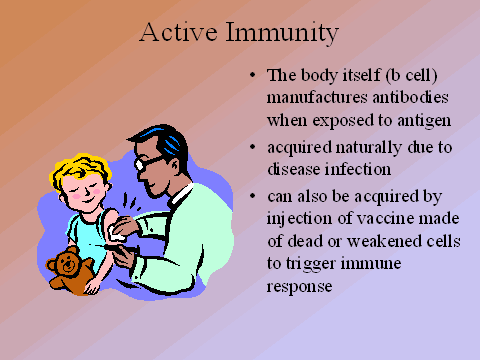
active-immunityIf you hang out in various vaccine discussions, you will hear all kinds of odd, unscientific ideas about the immune system of infants. One of the major issues is a substantial oversimplification of the immune system (of adults and infants), mostly thinking it’s one “thing,” ignoring the complex physiology of the immune system which is an almost infinite number of interactions between cells, proteins and factors, organs, blood, fluids, and other physiological systems.

Generally, the popular assumption is that the infant immune system is weak, making those children more prone to viral or bacterial infections. The antivaccine crowd uses this belief to either state that vaccines won’t work or might actually harm the immune system, along with some overstated magical properties of human breast milk to prevent infection.

But according to a new study, led by Dr. Brian Rudd of the Department of Microbiology and Immunology at Cornell University, published in the Journal of Immunology, the immune system of newborns and infants is actually stronger than an adult’s immune system. Unfortunately, it has a short “memory.”Read More »Infant T cells don’t remember pathogens–causes weaker immunity